Fendi New Bag: The Emirati Baguette and a Shape That Returns
November 1, 2026 · 10 min read
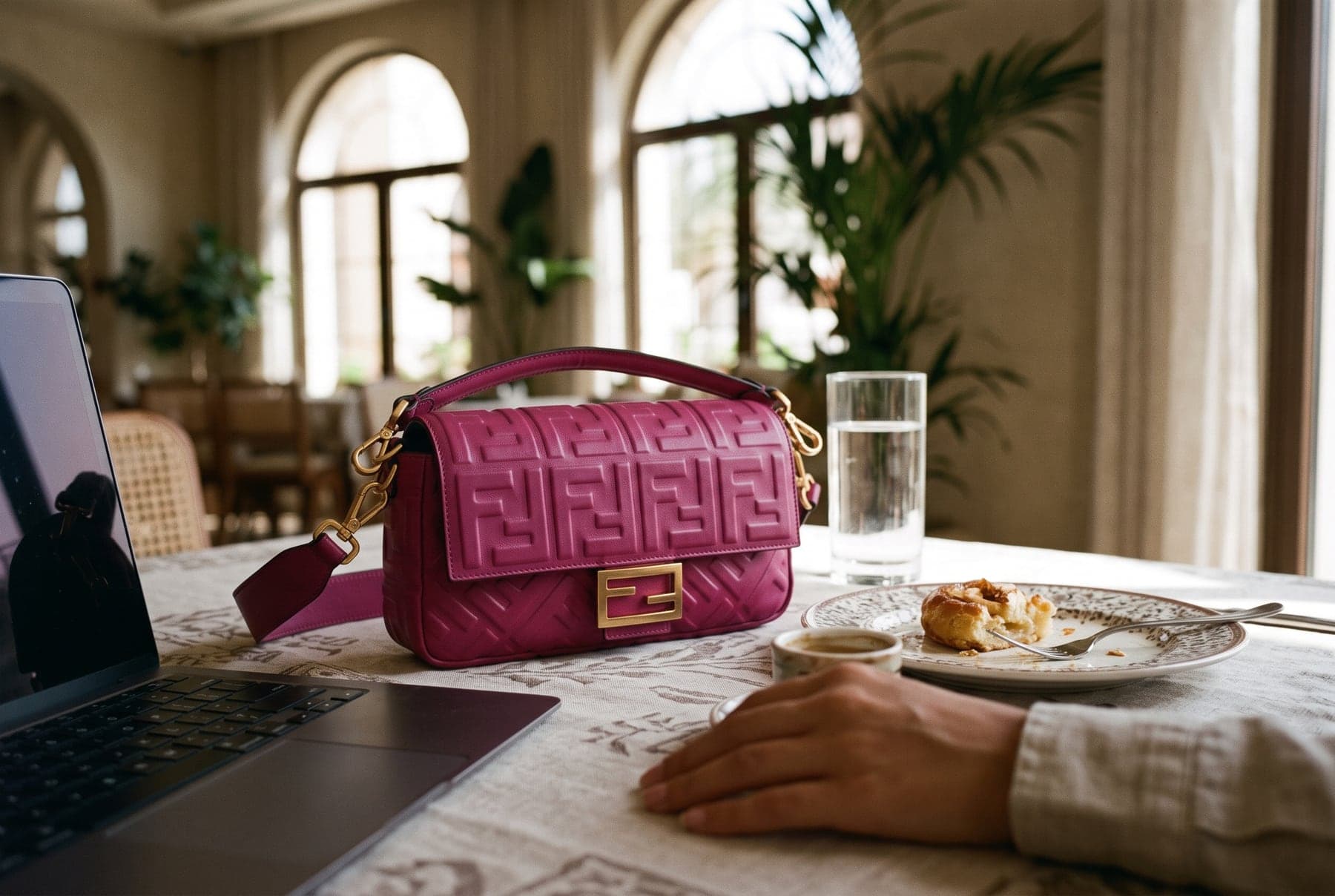
The Fendi new bag is an Emirati edition of its Baguette, unveiled in Sharjah by Sheikha Jawaher bint Mohammed Al Qasimi and reported by Sharjah24 on 31 October 2026. Fendi created it with Emirati designer Khalid Shafar, and twelve artisans from the Irthi Contemporary Crafts Council spent 435 hours over two years making its hand-crafted Talli details.
What Is the Fendi New Bag? The Emirati Baguette Unveiled in Sharjah
Fendi's new bag is a special edition of the Baguette, conceived to carry a distinct Emirati identity. According to Sharjah24, it was unveiled at Al Hamriyah Studios in Sharjah by Sheikha Jawaher bint Mohammed Al Qasimi, Chairperson of the Sharjah Family and Community Council.
What makes the Fendi Emirati Baguette worth more than a passing glance is that it is not a new shape at all. It is the house's most reinterpreted bag, given to a designer and a community of craftswomen, and returned with a vocabulary of its own.
Who designed the Emirati Baguette, and who made it?
Emirati designer Khalid Shafar designed it in collaboration with Fendi, and craftswomen from the Irthi Contemporary Crafts Council made it by hand. Sharjah24 reports that Irthi's artisans made the Talli bands that form a central element of the bag. So the Khalid Shafar Fendi edition is really a three-way conversation: a house's outline, a designer's idea and a living craft.
"From this starting point, I sought to present the iconic Baguette bag with a distinct Emirati identity while preserving the signature character that defines FENDI."
That balance is the brief any Baguette reinterpretation has to meet. Change too little and it is a colourway. Change too much and it stops being a Baguette.
Is the Emirati Baguette a limited edition?
Yes: Sharjah24 describes the collaboration as resulting in a limited edition of the Baguette. Part of the proceeds will support The Big Heart Foundation's humanitarian initiatives for refugees and vulnerable communities.
What the report does not give is a price, a stockist or a release date. This piece will not guess at any of them.
Talli, the Emirati Craft at the Centre of the Design
If the Fendi Irthi Baguette has a heart, it is the Talli work. Everything else on the bag is arranged around it.
What is Talli craftsmanship?
Talli is the traditional Emirati art of interlaced embroidery, in which threads are braided into decorative patterns, as Sharjah24 describes it. It was traditionally used to embellish Emirati garments, which makes its move onto a handbag a natural one: it has always been a craft of finishing and adornment.
Irthi has kept it moving. Through its programmes and skills development centres, the council has developed more than 80 Talli designs and patterns, according to Sharjah24.
How long did the Emirati Baguette take to make?
The Talli details took 435 hours of hand-crafting across two years, carried out by twelve Emirati artisans, as reported by Sharjah24.
Those numbers are the quiet argument of the piece. Luxury talks a great deal about time; here the time is counted, and it belongs to named hands rather than an atelier myth.
"The project reflects our belief that traditional crafts are not merely practices associated with the past, but living forms of knowledge capable of evolving and contributing to creative industries beyond geographical boundaries."
A Palette Taken From Palm Trees, Ghaf Blossoms and Desert Light
The colours are drawn from the landscape rather than a trend report. Sharjah24 describes a palette that moves between the deep green of palm trees and the grey and light green of the Ghaf tree. Mustard and gold evoke Ghaf blossoms and desert sunlight, and silver threads reference materials traditionally used in Talli.
At the centre of the design sits Shafar's reinterpretation of an Arabic letter, inspired by Kufic calligraphy and Fendi's logo, translated into a handwoven Talli pattern. It is a clever piece of translation: the house signature and the script share a geometry, and the Talli makes them one gesture.
The finishing is reported in the same register. Dark green silk fringes run across the bag's body and strap, and the metal clasp with the FF logo is finished with gold detailing and dark green enamel. On paper, it reads as landscape first and logo second, which is exactly the order a good reinterpretation should keep.
"This collaboration reflects our commitment to supporting local talent, preserving artisanal skills, and reinterpreting the iconic Baguette bag with a distinctive Emirati identity."
Why the Baguette Invites Reinterpretation: A Consistent Shape Built for Change
The Baguette takes reinterpretation well because it was designed to. According to Wikipedia, the concept was a small, streamlined bag on a short strap that could be adapted to different looks, colours and textures while keeping a consistent aesthetic.
That is an unusual starting point for a bag. Most designs are fixed objects that tolerate a new leather. The Baguette was a frame from the beginning: the outline stays, and the surface is where the story happens. Talli bands, silk fringes and a woven letter are, in that sense, not decoration added to a Baguette. They are the Baguette doing what it was built for.
It also arrived as a contrast. Wikipedia notes that many popular bags of the time were large totes. A small bag carried close under the arm was a different proposition, and a smaller canvas tends to concentrate attention on detail.
From 1997 to the 25th Anniversary: Fendi Baguette History in Brief
The Fendi Baguette history is, more or less, a history of other people's readings of one shape.
Who designed the original Fendi Baguette, and when?
Silvia Venturini Fendi designed the Baguette in 1997, as both Wikipedia and the South China Morning Post report. It was meant to be tucked under the arm like a loaf of French bread, and the name stuck.
"It was a special day when I designed this bag; the stars aligned. The horoscope said it was a Fendi day,"
Writing in the South China Morning Post, Vincenzo La Torre calls the Baguette the first It bag and credits it with helping make bags, rather than clothes, the focus of the industry. The same piece reports that its success introduced waiting lists for a coveted bag.
The thousand versions, and the relaunch
By 2012, the shape had already been reinterpreted on a scale few bags reach. Wikipedia, citing The New York Times, reports that Fendi marked the bag's 15th birthday and its more than 1,000 original creations with an exhibition at the Colette store in Paris. Wikipedia also reports, citing the FT's How To Spend It, that the bag sold more than a million units in 20 years.
In 2019, Fendi relaunched the Baguette, still designed by Silvia Venturini Fendi, according to Wikipedia.
The 25th anniversary: outside hands on a familiar shape
The closest precedent for the Emirati edition came in 2022. For the 25th anniversary, the South China Morning Post reports that Silvia Venturini Fendi and Kim Jones released a collaborative collection in New York with Marc Jacobs and Tiffany & Co.
Gulf News describes how far apart those readings were. Tiffany & Co. used sterling silver, enamel, croco, white gold and diamonds. Marc Jacobs drew on workmen's fluorescent safety vests and the grittier side of New York. Sarah Jessica Parker's version used embroidery in purple, wasabi, baby pink and soft blue, with four interchangeable buckles. Porter took a masculine theme, with Japanese craftsmanship focused on lightness and practicality.
"It’s a bag – and I am never one to shy away from an iconic bag"
Seen against that list, the Emirati edition is less a departure than a new entry in a long tradition: a recognisable outline, handed to a particular place and its makers, and read in their terms.
Choosing a Fendi Shape for Your Week: Baguette, Soft Trunk, Fendigraphy or Wallet on Chain
The Emirati edition sits outside this part of the conversation. What it does do is send a lot of people back to the question underneath it: which Fendi shape suits the way you actually live? Here are four, compared on the details that decide a week.
| Shape | Character | Approx. size (W x H x D) | Strap drop | Best week for it |
|---|---|---|---|---|
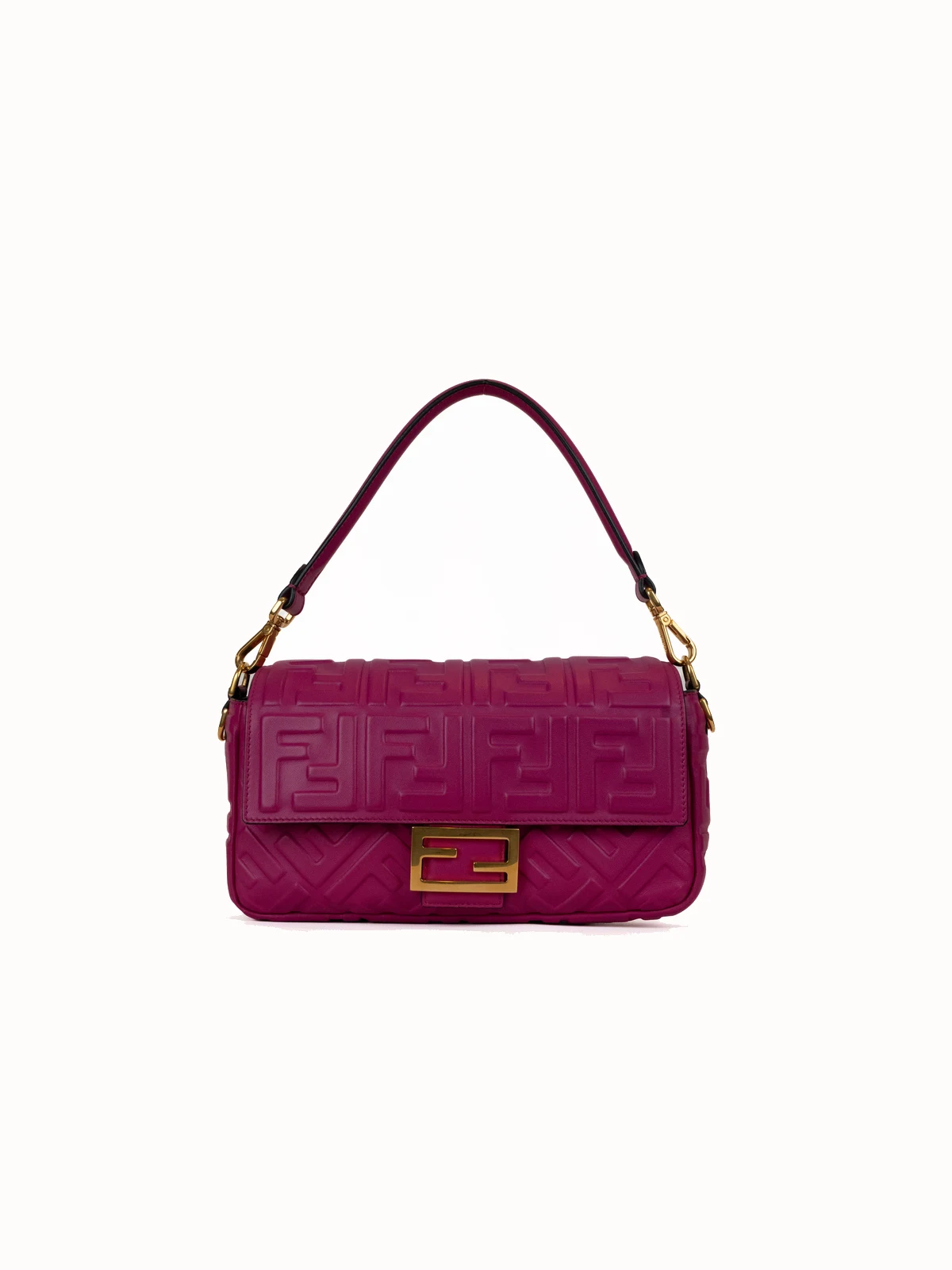
| Baguette, Ciclamino pink nappa | Soft, FF embossed in relief | 11 x 5.7 x 2.5 in | Top handle, detachable 16-inch strap | Summer days that turn into dinner |
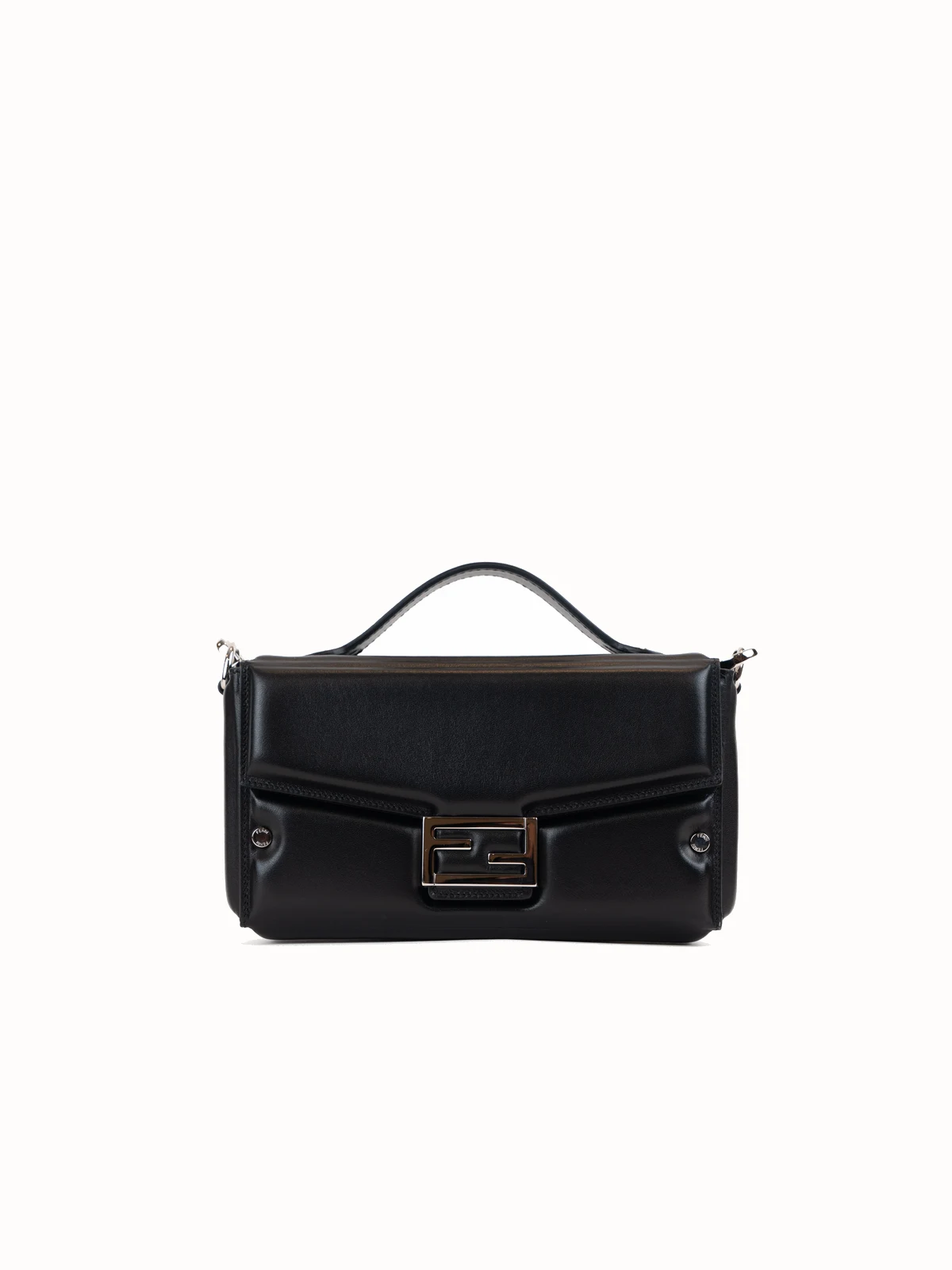
| Baguette Soft Trunk, black | Structured, miniature trunk | 8.5 x 5.1 x 2.6 in | 23.6 inches | A run of dinners and late evenings |
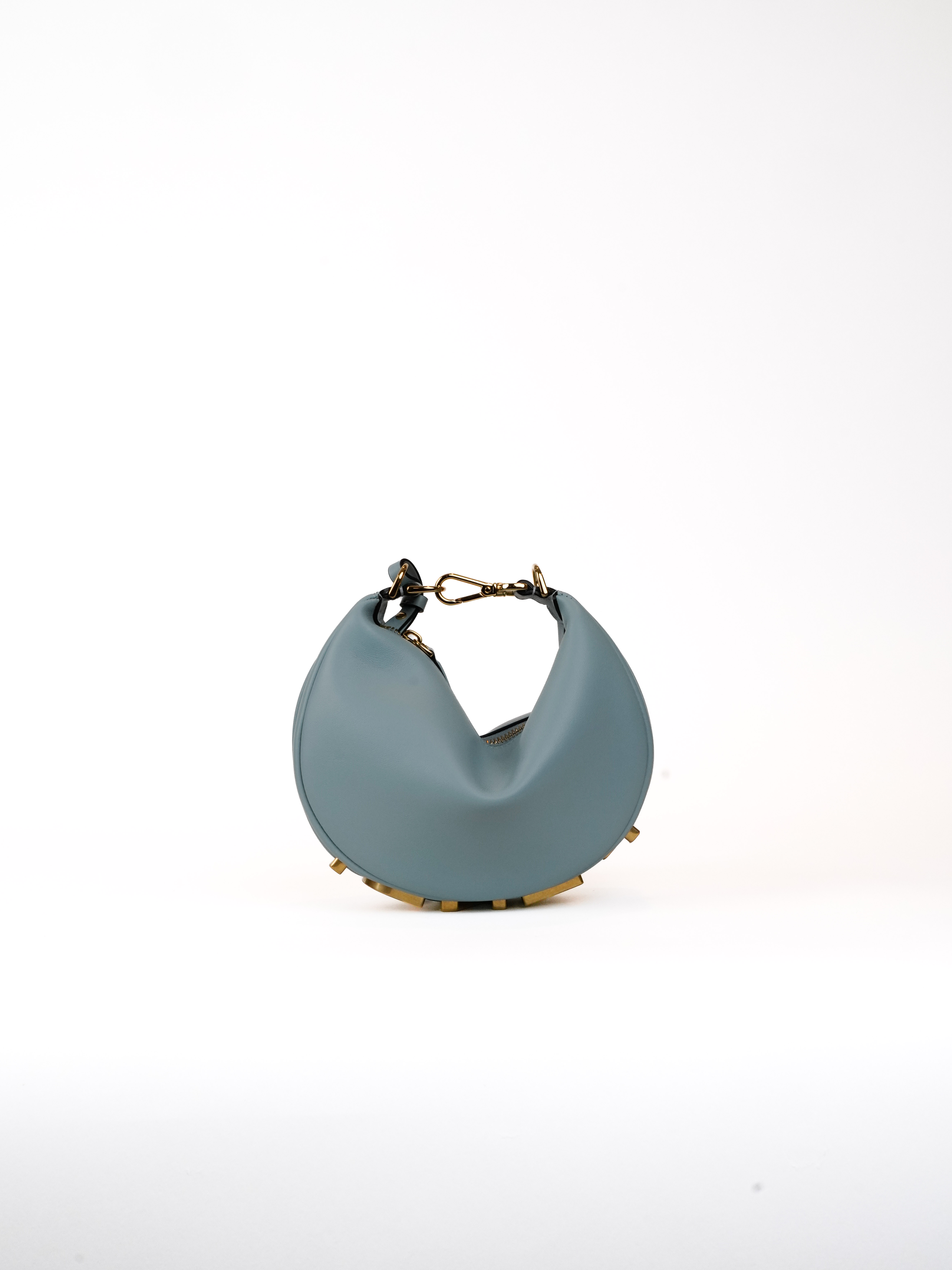
| Fendigraphy, blue leather | Curved crescent hobo | 11 x 6.7 x 3.9 in | 7.9 inches | Ordinary weekdays that need more space |
| Wallet on Chain, pink metallic | Compact, polished, jewellery-like | 7.5 x 4.3 x 1.6 in | 22 inches | Nights out with your hands free |
The Baguette, as designed
 FendiBaguetteRent this bag
If you want the 1997 idea in its purest form, start here. The FF motif is pressed into the nappa rather than printed, so the logo shows as relief and shadow, and the detachable strap means you can wear it under the arm as intended or carry it by the top handle. It takes cards, keys, sunglasses and a lipstick with a little room to spare.
The Baguette Soft Trunk, for evenings
 FendiBaguette Soft TrunkRent this bag
The Fendi Baguette Soft Trunk keeps the flap and the FF clasp but gives them the boxier lines of a miniature trunk. Its structure is the practical point: it holds its form on a restaurant table rather than slumping beside your plate. In black, the shape does all the talking.
The Fendigraphy bag, for the working week
 FendiFendigraphyRent this bag
The Fendigraphy bag is the one for days with more in them. No quilting, no printed monogram, just a sweeping curve that rides tucked under the arm on a short drop. It holds a wallet, keys, sunglasses and a small pouch, and the blue behaves like a neutral with white, grey and denim.
The Fendi Wallet on Chain, for nights out
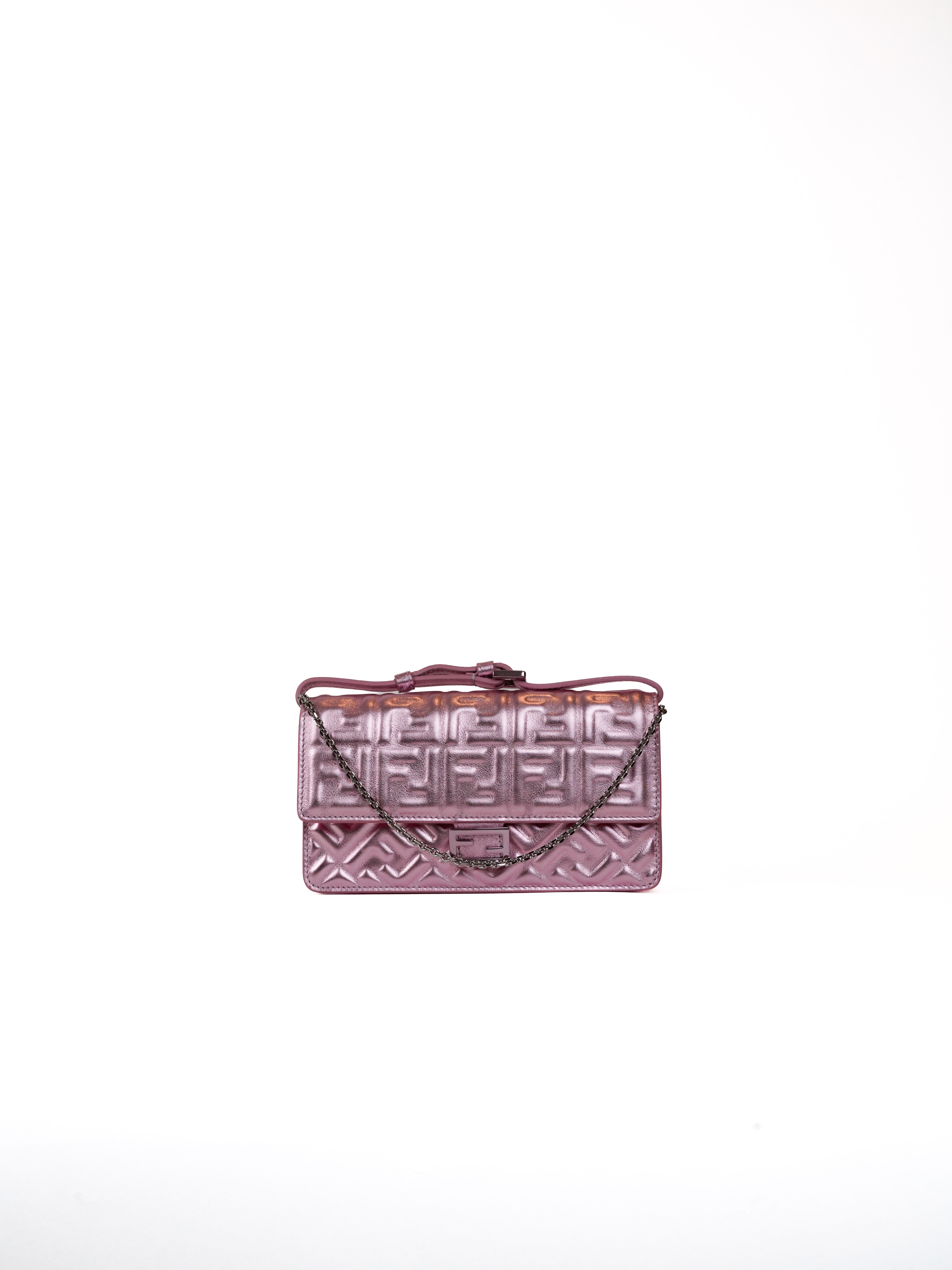 FendiWallet on ChainRent this bag
The Fendi Wallet on Chain asks you to edit: cards, a key, a lipstick and some folded cash. Leave the sunglasses case at home. In exchange you get a bag that sits crossbody at the hip through a crowd, and a metallic pink that shifts from blush to rose as you move.
Carrying a Fendi Without the Commitment
A Fendi shape is a personal decision disguised as a simple one. The Baguette under the arm feels different from a Soft Trunk at the hip, and neither tells you much about a week of carrying until you have carried it.
That is where renting earns its place. With Saclyn you can reserve a bag for a week, a month or a season, or keep rotating through a membership. The bag arrives the day before you need it, returns are prepaid both ways, and there is no minimum commitment. You can read the details on how Saclyn works, or in our longer guide to how luxury purse rentals actually work.
If you are torn between a curve and a flap, Margaux, our personal AI stylist, can read your taste in a short chat and tell you, with a point of view, which shape she thinks you will reach for. Then browse Fendi bags to rent and spend a week finding out whether she was right.
Frequently asked questions
- What is Fendi's new Emirati Baguette?
- It is a special edition of the Fendi Baguette with a distinct Emirati identity, created by Fendi with Emirati designer Khalid Shafar and unveiled in Sharjah by Sheikha Jawaher bint Mohammed Al Qasimi, as reported by Sharjah24 on 31 October 2026.
- What is Talli craftsmanship?
- Sharjah24 describes Talli as the traditional Emirati art of interlaced embroidery, in which threads are braided into decorative patterns. It was traditionally used to embellish Emirati garments.
- How long did the Emirati Baguette take to make?
- Twelve Emirati artisans from the Irthi Contemporary Crafts Council spent 435 hours over two years hand-crafting its Talli details.
- Is the Emirati Baguette a limited edition?
- Sharjah24 describes it as a limited edition, with part of the proceeds supporting The Big Heart Foundation. No price, stockist or release date has been reported.
- Who designed the original Fendi Baguette?
- Silvia Venturini Fendi designed the Baguette in 1997, as a small, streamlined bag on a short strap that could change with colour and texture while keeping a consistent shape.
Sources
- Sharjah24: Jawaher Al Qasimi unveils Emirati edition of FENDI’s “Baguette”, 2026-10-31
- Wikipedia: Baguette (bag), undated (accessed 2026-11-01)
- South China Morning Post: The Fendi Baguette turns 25: Kim Kardashian, Sarah Jessica Parker help celebrate milestone for the first It bag, 2022
- Gulf News: Fendi celebrates 25 years of the iconic Baguette bag, 2022-11-04
Legal Disclaimer: Saclyn is an independent luxury rental platform. Saclyn is not affiliated, associated, authorized, endorsed by, or in any way officially connected with Fendi or Marc Jacobs, or any of their subsidiaries or affiliates. The names Fendi and Marc Jacobs, as well as related names, marks, emblems, and images, are registered trademarks of their respective owners. Brand names are used solely for descriptive and identification purposes.